

EDITORIAL NOTE
This Solutions Journalism investigation is centered on connecting the dots between climate stress, floods, extreme heat, and new pathways to adaptation and restoration in Maiduguri, North East, Nigeria.
Investigation, Reporting, and Writing by: Eden Benibo, Solutions Journalist and Editor, Hello ICON Magazine
Published: June 5, 2026, World Environment Day
Source: Edidiong Ebitu
Connecting The Dots: 10 Years of Climate Stress
North East Nigeria is known for one story: insecurity. From the early years of Boko Haram to today’s road and village attacks by “unknown gunmen.”
But there’s another story that ran underneath it for a decade. Climate stress. On human health: bodies. On education: schools. On livelihoods: shops and farms. On decisions to stay or leave.
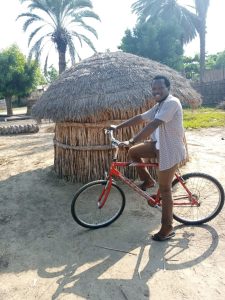
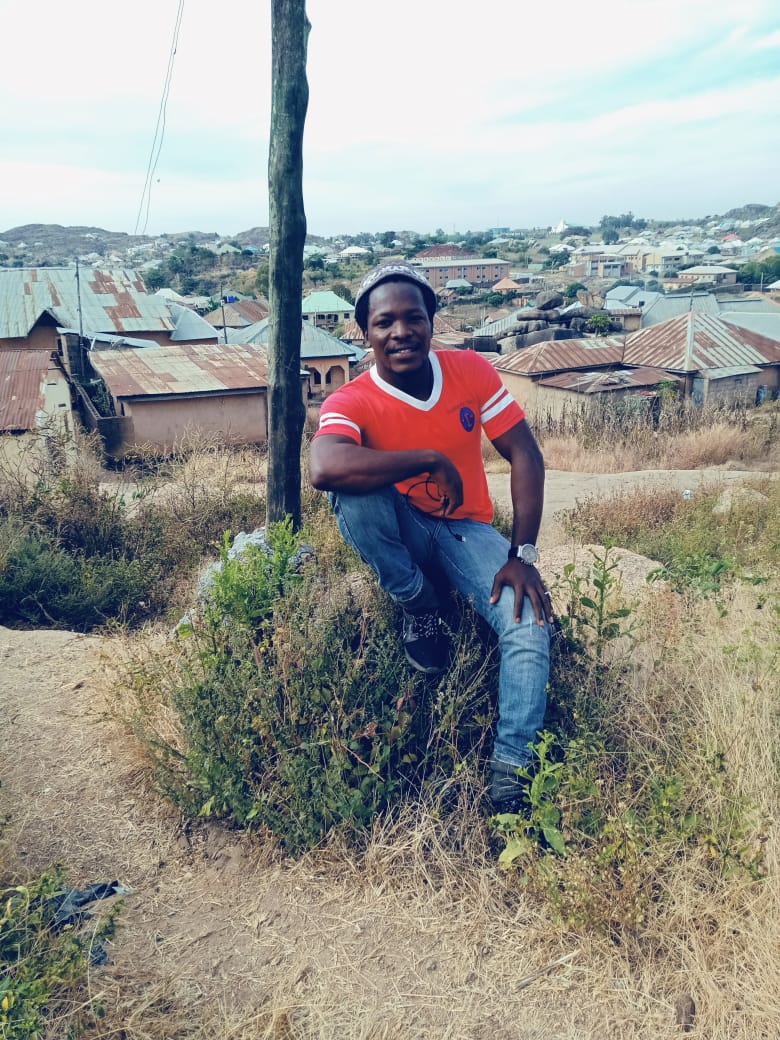
Edidiong Ebitu, before he relocated from Maiduguri, Nigeria, to Togo for safety, greener pastures, and more adventures.
This is the story of Edidiong Ebitu.
“Before moving to the North, I was living in Akwa-Ibom State, Nigeria. I left my biological parents when I was about 13 years old to live with my foster mum,” he told Hello ICON Magazine.
When it came to choosing a university as a young adventurous teenager, he made a choice that left his family in panic.
“I chose the University of Maiduguri without the knowledge of any of my family members. Although my foster mum did all she could to try to stop me from going that far, the adventurous soul in me resisted by all means. Unsure of what the future held, I just wanted to go to a place far from home. Far from the life I have always known.”
He resumed at the University of Maiduguri on January 11th, 2014.
He didn’t know what that year would bring.
“Same year shortly after I resumed, we had the Chibok Girls Abduction. That was the first serious heat. Then we also had Giwa Barrack Attack at the heart of Maiduguri. Although there had been other mushroom attacks in the villages but this was the first one I experienced. I vividly remember the gunshots and all.”
So Began The Real Adventure
Edidiong came looking for a new life and met war first.
Climate hazards came next as a more “silent killer”, and unlike the gunmen, it stayed longer in every classroom, every market, every home. At scale, this is the lived reality across communities in Maiduguri.
Before he finally relocated to Togo for safety and “greener pastures,” while maintaining his adventurous spirit away from home, Edidiong lived in Maiduguri from 2014 to 2024. Ten years. Long enough to see weather turn into a weapon.
The hidden cost of that decade is what this report documents: the pain points, the lived experience, and the shared reality of underserved communities in Maiduguri who are dealing with both conflict and climate.
Data shows Edidiong is not alone in this. According to the United Nations, climate-related shocks are triggering displacement and driving conflict in Nigeria’s North East. UN Resident and Humanitarian Coordinator Mohamed Malick Fall singled out clashes over dwindling resources between farmers and herders, noting that “this conflict is exacerbated by the climate crisis, which is forcing herding communities to leave their traditional lands in search of better grazing options.”
NiMet and its 2024 Seasonal Climate Prediction also indicate that Borno State has experienced a trend of more extreme heat days, shorter rainy seasons, and more intense rainfall and dust events in recent years. That 10-year window matches exactly with Edidiong’s time in Maiduguri.
When Weather Becomes Survival
For Edidiong, a storm is not just weather. It is a fight for survival.
This is how Edidiong lived it:
“These days, I see people treat climate hazards like it’s something new. But for the past 10 years I lived in the North East, extreme weather conditions have been a reality. In the North, specifically in Maiduguri Borno State, we have extreme weather conditions. When it is cold, it is very cold, and when it is hot, it’s extremely hot. When it is rainy, we have sand storms before the rain.”

That sets the baseline. In Maiduguri, weather swings to extremes and sand storms announce the rain.
The harm is not only in big disasters. It is in the daily dust and the waiting.
“When the sand storm comes around, no matter how you close your house, the whole house will be dusty. You have to do a clean up afterwards. The sand storm is one of the things responsible for a lot of blind folks in the North, because if it catches you outside and you are not protecting your eyes very well, the whole dirt is in there.”
The dust doesn’t dirty homes. It takes sight.
Eye damage and blindness from repeated exposure is part of the burden.
The World Health Organization notes that “sand and dust storms episodes contribute directly to air pollution by increasing particulate matter concentrations” and that they are “a formidable, widespread threat to health.” WHO also flags eye impacts specifically, warning that exposure to airborne mineral dust contributes to health risks and that vulnerable groups need real-time information during events.
This is what it feels like in the middle of a sand storm:
“The sand storm comes like a thick brown cloud. You can’t see before, and if it passes you, you can’t see after. If you’re in it and it passes you, you turn dusty immediately.”
Edidiong learned the hard way:
“One time I was caught in the sand storm, it took my bicycle. I had to hold a tree and as I was holding the tree, a branch fell from the tree. It’s actually always disastrous because of how strong the wind is, it can uproot trees sometimes. Trees literally fall like someone was digging them up, that’s how strong the wind is. I remember an incident where trees uprooted by the wind landed on people’s vehicles. If your cars are packed outside and it’s not in a garage, then sorry.”
That wind is not just inconvenient. It’s strong enough to uproot trees and turn an ordinary day into danger.
Report from Maiduguri confirms this. According to Daily Trust, in April 2022, “a heavy rainstorm associated with wind storm destroyed dozens of houses and properties worth millions of naira in Maiduguri.” The report noted that the storm “uprooted trees in many locations within Maiduguri and its environs” and left many residents homeless after roofs were torn off.
All efforts to get the reaction of the Borno State Emergency Management Agency, SEMA, proved abortive. However, a staff of the agency who did not want to be named said officials had commenced an assessment of the damage.
Source: Edidiong Ebitu
The institutional damage was just as bad.
“From 2014 to 2017, I witnessed a sand storm that came and covered the majority of the roofs on the University campus. I stayed in University of Maiduguri Campus and I saw lecture theatres with roofs torn off by the wind. Even a new Senate building roof was removed by the wind. Almost 80% of the roofs in the University campus needed roof repair immediately.
At some point, the University had to relocate residents in the University quarters to the University guest house until the roofs were renovated.”
That account matches what was reported at the time. According to Daily Trust in 2014, the storm “affected the new structure accommodating the Faculty of Education and some parts of students’ halls of residence.” The Nation also reported that “a section of the roof of the Faculty of Education building was blown off” and “the Department of Geology was worse hit as its roof was blown off.”
According to Daily Trust on June 25, 2014, Maiduguri “turned into night in the afternoon” as the storm hit. The paper reported that the storm “affected the new structure accommodating the Faculty of Education and some parts of students’ halls of residence” and “destroyed many houses and trees across Maiduguri metropolis.” A 400-level Sociology student told Daily Trust that the storm lasted about 30 minutes and was characterised by strong wind that carried clouds of sand and reduced visibility.
The Nation, reporting on June 5, 2014, said the rainstorm “raged for two hours” and swept through UNIMAID while many students were in examination halls. “A section of the roof of the Faculty of Education building was blown off, exposing documents and furniture in lecturers’ offices to the elements. The Department of Geology was worse hit as its roof was blown off.”
Students gave first-hand accounts. One said the examination hall “vibrated continuously” and “the ceiling was blown off. Everybody was scared. We wrote the paper, despite that the rainstorm blew sand into the hall. Our answer booklets were covered in dust.” Another student at Modibbo Lecture Theatre said: “I testified to the greatness of God when trees were uprooted right before my eyes. I have never witnessed such.”
The Nation also reported damage beyond lecture halls: the College of Medical Sciences and Faculty of Pharmacy were affected, electricity poles were uprooted leaving the campus in darkness, tree branches destroyed buildings and vehicles in staff quarters, and shops at the commercial area and Ecumenical Centre “were reduced to rubbles.”
That’s climate stress hitting education. When roofs go, classes stop. When residents are moved to guest houses, normal life stops.
Eco-Grief: When the Land Turns Against You
Beyond headlines, climate change means eco-grief and eco-anxiety. It means watching the land you depend on become hostile.
“The sun comes out as early as 5am to 5:30am. It increases dehydration death rate. The sun itself is so heavy. If you keep wet clothes outside, in a very short time, the heat dries it.”
Edidiong believes human activities and local governmental negligence affected the climate in Maiduguri, Nigeria.
That weight is what he carried every morning before he migrated. The grief of a place that no longer sustains you. The anxiety of planting knowing the rain may destroy what little you have.
For farmers, the pattern is cruel. Months of dryness, then a downpour too violent to help. The soil cannot hold it. The harvest is lost before it begins.
“The wind is followed by rain and ice droplets. If the wind enters your house, it covers it with dust. The rain in the North doesn’t come often. Sometimes, it comes 4-5 times in a year. But whenever it comes, it causes havoc. It floods farms, crops die.”
The Breaking Point: Flood, Collapse, Insecurity
Then came the day the water had nowhere to go.
Edidiong explains the engineering problem behind the flooding:
“Everytime, there is always flooding here because whenever the Alau Dam is filled up, it is opened and it flows through Maiduguri metropolitan community. This is a dam connected from Lake Chad.”
When that release meets 4-5 violent rains a year, the city drowns.
“The 2024 rain was so heavy that the dam collapsed. The whole of Maiduguri was flooded, and people were rendered homeless. It was just humanitarian organisations that came to the aid of people using canoes to access people houses so they don’t get drowned,” he said.
On insecurity, Edidiong shared how the 2024 flood also led to the collapse on the prison fence, leading to another layer of insecurity. “This made prison inmates literally escape from prison. Insurgencies. And where were they running back to? The community, to continue perpetuating harm. So the flood caused Maiduguri a lot.”
“I remember during that time Senator Kashim Shettima, the present Vice President of Nigeria, had to visit Borno State personally to console victims of the flood because he is a former Governor of the state. But I believe all these would have been avoided if proper maintenance had been done to the Alau Dam.”
The flood did not stop at homes.
“The flood also got to the zoo, bringing out crocodiles, snakes, and all those reptiles by the roadside. It pushed down one of the prison gates in Maiduguri, and the inmates escaped. This brought increased insecurity and insurgency.”
In that flood, the lines between climate, health, and security disappeared. Homes were underwater. Wild animals were on the streets. A broken prison gate added fear to an already traumatized city.
“Some individuals even cooked and took them to the different schools the IDPs were located. Those of us in the main university campus community were not affected by the 2024 flood. But the teaching hospital outside the campus was badly affected. The flood turned river took months to dry up.”
Climate stress, health and survival
“The 2024 flood badly affected the mental health of victims and residents because basic infrastructures were affected, including businesses and marketplaces, and many individuals took advantage of this vulnerable season. You can’t go to buy. Like Gamboru Market, where people buy all the vegetables, food items, and all. So economically, during the floods, businessmen and women lost enough goods because the flood water was there for at least a week. So one couldn’t go in to save their goods. To make things worse, the surviving small shops and kiosks immediately did a price hike on the goods that they had available.” – Edidiong
“Another thing was there was a disease breakout at the time of the flood disaster. Where you have water bodies gathering for a long time, water borne diseases spread fast.” – Edidiong
Data backs what Edidiong saw.
According to a March 2025 study in Environmental Health Insights, climate change-induced flooding has triggered a public health crisis in Borno State. The researchers found that flooding destroys water and sanitation systems, creating breeding grounds for cholera, malaria, and diarrheal illnesses. It also drives up malnutrition as farms are destroyed.
The paper cites September 2024 specifically. Heavy rainfall and the collapse of dam infrastructure affected more than 200,000 people, killed 30, and displaced 50,000. The authors note Borno had already been dealing with desertification and malnutrition for over 10 years, especially among mothers and children. With cholera and diphtheria already spreading in mid-2024, the floods added more pressure to a healthcare system that was already limited.
“Also, one could not get clean water because even boreholes were submerged by the flood, so those selling water increased the price of water. It made life feel terrible and more unbearable. You can imagine trying to buy something that was worth 1000 naira, now sold for 10,000 naira because there was flood with little to no other option of survival.” – Edidiong

Forced Migration: The Only Choice Left
After 10 years, Edidiong left. Not because he wanted to, but because staying meant risking death by sun, storm, or flood.
He tried to build a life there first. Finished school and stayed to work.
“After school, I worked in Yobe State, Damaturu and Borno State, Maiduguri before I finally migrated.”
He worked in two of the hardest hit states in the North East. He watched the weather get worse year by year and still stayed. Until the cost of staying became higher than the cost of leaving.
His story mirrors what is happening underserved urban and rural communities across Nigeria. Climate stress breaks livelihoods, and people move. The difference is the hazard. While for some it’s: heat, dust, and flood. For some others it’s: gas flares, acidic rain, and rising seas.
In all, the outcome is the same, forced migration, empty schools, and elders left behind.
Migration is not failure. It’s what people do when the land turns against them and no one builds a better system.
“No matter the body that is set up, if we still have the same ill mannered people, the cycle of suffering will continue. Looting becomes inevitable, and that is one of the root problems of African countries in today’s world.
If people could show some level of empathy, knowing that it could have been them as the victims, then a lot of exploitations of vulnerable people with price hikes and mismanagement of funds wouldn’t even have been an issue in the first place. With little control and supervision at the IDPs, there were people literally going with cars to pack food stuff that were brought for people that were displaced by the flood, and these people going with hilux to pack these foods for themselves were living comfortably. Most of them, the floods never even affected them. We later saw the same palliatives meant to cushion the hazardous situation caused by the flood being sold by the roadside by traders.”
Solutions Beyond Resilience: Pathways to Adaptation and Restoration
Edidiong’s 10 years are data. They tell us what adaptation must look like.
He now lives in Togo, where he works as a teacher. While his experience in Maiduguri taught him resilience, the contrast between the two systems showed him what adaptation and real-time solutions actually look like.
“Till date, I can’t say that Maiduguri has recovered fully. I now live in Togo. Instead of water flowing to people’s houses, there is a well planned irrigation system that channels it properly.”
That one line reframes migration. It’s not just escape. It’s exposure to a different way of managing water.
In Maiduguri when the dam is full they open it and the water runs straight into communities. In Togo they built channels. They planned for where the water should go before it falls. That’s the difference between surviving a season and losing a home to it.
Turning 10 Years of Lived Pain Into A Roadmap
1. Early warning systems: Storms and floods, delivered in local languages, so people know when a sand storm or dam release is coming.
In 2024 the Alau Dam was opened with little notice. Communities woke to water inside homes.
“The main reason why this flood happened was this. Money had been allocated for repair of the same Alau dam in Konduga Local Government Area, but it wasn’t repaired or maintained. The dam was in a very bad condition for more than 10 years prior to the 2024 flood.
When the 2024 flood came, it entered the Monday market. The Giwa Barrack. It entered into the Maiduguri teaching hospital. It entered the zoo. Schools were shut down because majority of the government schools were used as camp for internally displaced people.” Edidiong shared.
Experts say alerts via radio, SMS, and community leaders in Kanuri and Hausa 48 hours before a release could reduce displacement. Information is infrastructure.
2. Climate-resilient housing: Structures that can hold against wind that uproots trees and rain that rips off roofs.
Most housing in Maiduguri was built for a drier climate. Mud walls collapse under heavy rain. Zinc roofs are torn off by wind. Edidiong saw roofs fly and walls fall when the rains finally came.
Updated building codes, stronger foundations, and roof anchoring are needed to withstand current weather patterns.
3. Water management: Channels that direct rain and dam water through irrigation, not into houses and farms.
Togo uses planned channels to direct water. In Borno, drainage is limited and dams are released as emergency measures. Edidiong saw the difference firsthand. In Maiduguri the water ran into communities. In Togo it ran into channels.
“The rain in the North doesn’t come as often as I experienced in the South, sometimes in a whole year, a week. Sometimes in a whole year, two weeks. It’s of recent time that it rained very often. What we knew the North for was heat and harmattan. And during those period, it was always at the extreme, even the rain.
When the heavy rain comes, the government instructs people to move. But you know, it’s not everybody that will move because where are they going to move to?” Edidiong said.
“A body was set up by the government to monitor where people build so they don’t build along water ways,” he added.
The Borno State Government set up that system. The Borno Geographic Information Service, BOGIS, works alongside monitoring committees from the Ministry of Environment and physical planning units. Their mandate is to oversee land use, demarcate riverbanks, and stop unauthorized building along waterways and buffer zones in Maiduguri.
BOGIS handles urban land administration. It reviews developments on riverbanks and identifies illegal structures on water paths and high-risk flood zones. The State Environment and Works Ministries conduct inspections, clear blocked waterways, and remove buildings that obstruct natural drainage in the Maiduguri Metropolitan Council area.
The objectives are clear: flood prevention by stopping construction that blocks rainwater flow, and title verification to penalize properties built along water corridors without approval.
Water management specialists point to irrigation networks, irrigation networks, drainage systems, and controlled release schedules as ways to keep water out of residential areas.
4. Livelihood alternatives: De-risking income from rain.
A single flood can wipe out a season’s crop and years of investment. For 10 years in Maiduguri, Edidiong watched it happen. The rain came only 4 to 5 times, and when it did, it destroyed the farms it was meant to feed.
Agricultural economists note the need for crop insurance, storage facilities, processing, and off-season employment so that household income does not depend entirely on rain-fed farming.
People shouldn’t have to leave home just to survive a bad season.
Restoration starts with listening to people like Edidiong and funding what they already know they need.
Migration is not failure. It is evidence.
Migration for Edidiong was not just an escape. It was seeing another system work.
Edidiong left the North East to survive. Millions in the Niger Delta are asking the same question he did: “What future am I giving my child here?”
Until we connect the dots between climate stress and human movement, and fund the pathways to restoration, the answer will keep being: leave.