

Editor’s Note: This is Part 1 of a 3-part, 30-month investigative series examining Nigeria’s 30×30 target, socio-economic inequities and climate realities in Idama, Rivers State.
Field footage: Idama, Rivers State, July 2026| Hello ICON Magazine
The Sea Is Polluted. The Air Is Too.
In Idama, Nigeria’s 30×30 promise meets climate stress, empty nets, broken roofs, and a community left behind.
Inside Madam Oluba’s house, basins and buckets catch rain dripping through holes in the roof.
“Life has changed a lot from the one we used to know during our days growing up,” Madam Oluba, 72, told Hello ICON Magazine. She is one of the oldest periwinkle harvesters and traders in Idama.
“I now sell from a small kiosk beside our family house to support my periwinkle trade. The sea is polluted. The air is too. As I speak, the acidic rain from gas flaring is destroying the roof of homes, including mine.”
This is the reality for most homes in Idama, including the community’s only school and primary health centre.
In Idama, a small Kalabari island in Rivers State, tomorrow is being eaten today.
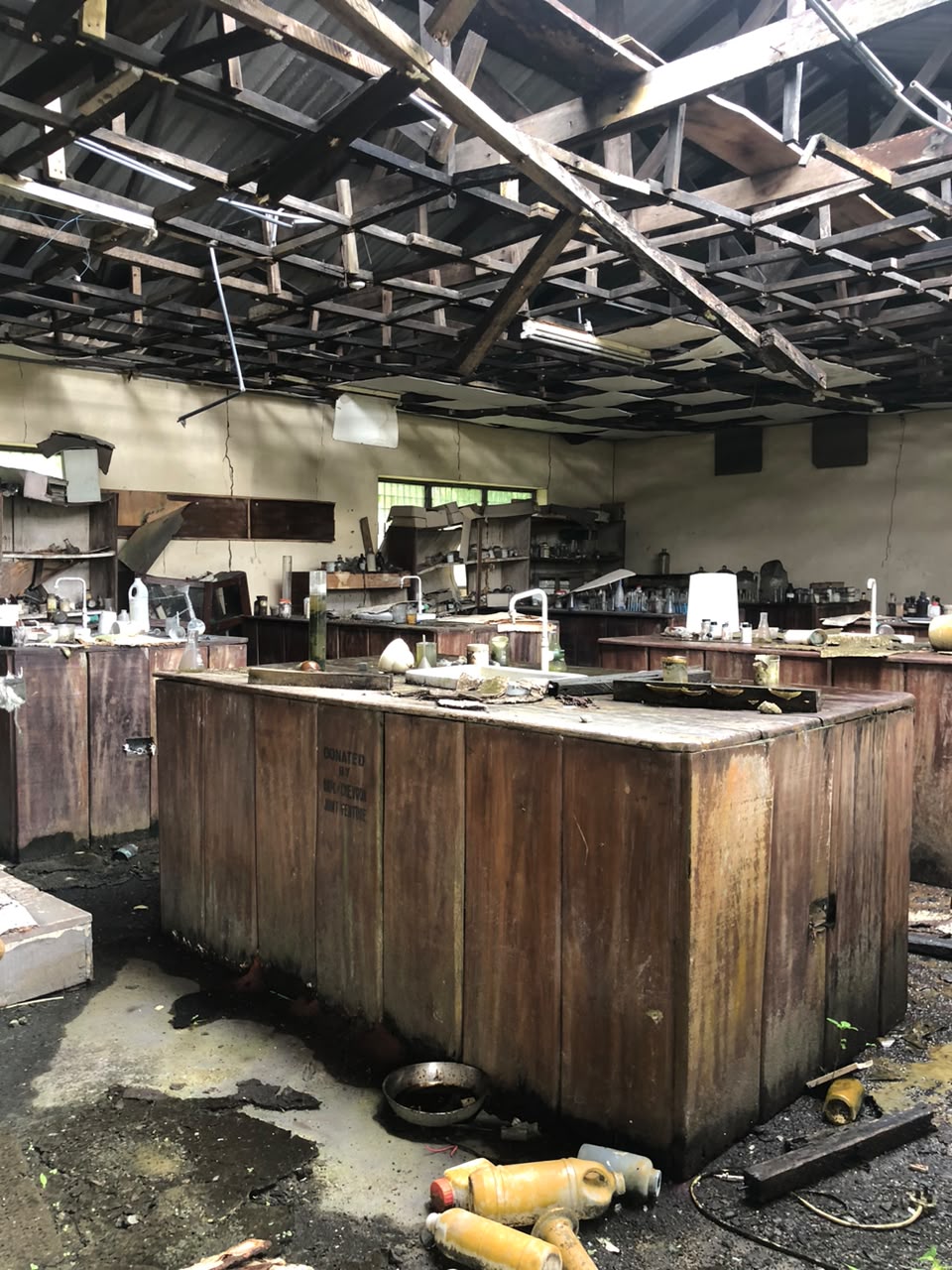
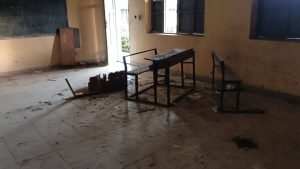
It is eaten in Idama’s only community school, where acidic rain has corroded the roofs of the lab and library, a place where future leaders lack access to quality basic education.
It is eaten in Idama’s only Primary Health Centre, where two staff run a collapsing building.
“Just one Community Health Officer and me, a lab technician,” says Ibiba Alaye Harry, 51. She was redeployed to Idama, her hometown, to serve after years in Abonnema, the local government headquarters. “There are no doctors. No nurses. No cleaners. No security.”
One side of the roof was blown off by wind and rain more than a year ago. Rain falls straight inside. The walls are damaged. “So critically ill patients cannot be admitted for proper treatment,” Ibiba says.
Under Nigeria’s National Health Act 2014, primary health care delivery is the responsibility of Local Governments, coordinated and supervised by the State Primary Health Care Management Board. In Rivers State, this mandate is held by the Rivers State Primary Health Care Management Board.
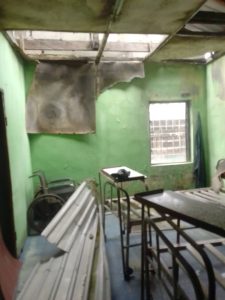 Idama’s only Primary Health Centre is crumbling, with part of its roof blown off. For a community battling pollution-related illness, care is now out of reach. Photo: July 2026 | Hello ICON Magazine
Maternal care is worse. Night births happen in darkness. The community generator that powers Idama only runs from 8 p.m. to midnight, and only on days it works and there is fuel. Aside from this, the only power source is private generators for those who can afford them.
Pregnant women are left with three options:
First, relocate to a safe clinic outside Idama before delivery, if they can afford it.
Second, deliver at home with the help of a local midwife and a small private generator for power.
Third, in the worst cases, give birth at home in the dark with any available lamp, risking complications with no doctor, no light, and no backup.
It is eaten in the creeks, where overharvesting of periwinkle, irresponsible fishing and exploitation of other seafood, compounded by past oil bunkering and current climate stress, have destroyed what remains of the marine ecosystem.
It is eaten in policy, where Nigeria’s 30×30 commitment to protect 30 percent of land and ocean by 2030 remains far from the realities in Idama.
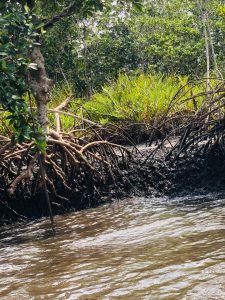
Idama’s mangroves, once a nursery for fish and crabs, are dying from gas flaring and acid rain. Without them, livelihoods are disappearing.
It is eaten in the lives of young people and their families, in dreams and futures. In forced migration that has left Idama predominantly occupied by elders. In bodies that cough through smoke, in children with skin rashes after the rain, and in minds carrying eco-anxiety and eco-grief for a sea that no longer gives and a land that no longer protects. Here, culture is breaking because the sea and the land can no longer sustain them.
The Contradictions of Idama’s Reality
Idama is rich in policy yet poor in practice. Her people wallow in poverty, yet Idama is home to wealth.
Hosting OML 24 and OML 55, oil companies operate here. Nigeria earns from here.
But Idama has been left behind for decades. The Community School is dilapidated. The Health Centre has become a shadow of itself. Climate change is collapsing what is left of fishing and the periwinkle trade.
A place meant for pride has become a place for survival.
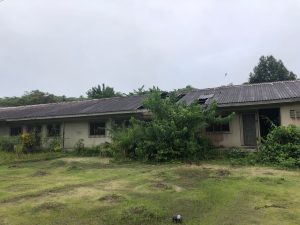
Idama’s only Community School, with roofs ripped off and classrooms unsafe, where acidic rain has eaten through the lab and library.
“I wanted my son to grow up in Idama like I did,” said Mr. Ipalibo Tom Princewill, 40, a former teacher and Idama indigene. “I studied in the Idama Community School. I taught in that school. I sent my son to that school. Then I pulled him out and had to relocate my family. The rain from gas flaring is eating the roofs of the lab and library. There are no textbooks. No equipment. The smoke and health hazards from the flares are too much. What future am I giving my child here?”
30×30 on The Ground: Acid Rain, Rising Water, and Marine-Human Loss in Idama
In December 2022, world leaders adopted the Kunming-Montreal Global Biodiversity Framework. The promise was simple: protect 30% of the ocean by 2030. This promise is far from the realities of the historically marginalized people of Idama.
For Nigeria, that promise means the Niger Delta. It means communities like Idama. But 30×30 is not only about protecting the ocean. It is about protecting the people who live with the ocean.
While Nigeria projects its 30×30 commitment on global stages, in Idama, there is no protection in place, only pollution and a single source of livelihood in a mangrove overharvested with no law.
In Idama, climate stress is not a projection. It is a hole in the roof. The rain that falls is acidic from gas flaring. The sea that rises pushes salt into the creek. The mangrove that once buffered storms is now overharvested and dying.
You cannot ask fishermen and periwinkle women traders to protect the marine ecosystem when they are trapped in the cycles of ignorant overharvesting. They are wallowing in the poverty of a declining livelihood. They are facing climate stress the country does not count, acidic rain that corrodes zinc roofs in months, higher tides that swallow fishing camps, and a longer dry season that dries periwinkle beds. And they are living with the longstanding neglect of key decision makers.
You cannot ask mothers to stay and raise children here when the clinic has no doctor and no drugs. You cannot ask teachers to build future leaders when the rain is eating the roofs of the school. You cannot ask young people to stay when there is no health, no school, no work, and no hope.
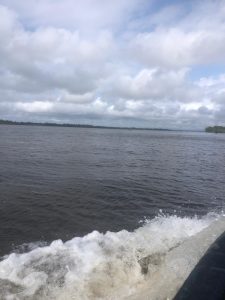
In Idama, climate stress broke the creeks. Gas flaring broke the roofs. Policy gaps broke the systems. And when all of that breaks, people leave.
But conservation needs people. Marine protection needs communities who have a reason to stay, a clinic to go to, a school to send their children to, and a livelihood that does not force them into the city.
Nigeria has committed to protect 30 percent of its land and sea by 2030. For Idama, that would mean protected waters, sustainable fisheries, periwinkle beds that can rest, and mangroves that can grow back.
The Loopholes
On paper, 30×30. In Idama, empty nets.
Periwinkle beds that once took two hours to fill a basin now take two days, if anything is found at all. The skill dies with the elders who remain.
There are no Marine Protected Areas here. No community-led conservation plan. No enforcement against overharvesting of periwinkle and fish, especially by neighbouring villages fishing inside Idama territory. Enforcement against oil bunkering has begun, but people still live with the damage of the last decade.
Policy exists on paper. It has not reached the creeks.
Without that, 30×30 will remain a target without a people. A promise without a home.
In Idama, the promises are dangling. The dreams are dangling. The future is dangling.
And by 2030, there may be nothing left to hold them up.
The Petroleum Industry Act and Socio-Economic Realities
In Idama, like every other coastal community hosting oil companies, there are legal intermediaries between the community and the companies.
Under the Petroleum Industry Act, Idama’s Host Communities Development Trust is led by two chairmen: Chief Akobo Gogo-Abite Dateme for OML 24 (operated by Newcross Exploration and Production Limited) and Ven. Innocent Karibo for OML 55 (operated by Belemaoil Producing Limited).
HCDT chairmen are not company negotiators. They are not go betweens for daily complaints. Their job is to lead the community fund. To oversee the trust, handle budgeting and project execution, and carry overall responsibility. The Advisory Committee brings community needs to the table.
Core Responsibilities of Trust Leaders
Fund Management: Collect the annual money oil companies must pay. Spend it.
Project Delivery: Oversee infrastructure, schools and health projects. Projects come from community needs assessments.
Governance: Keep it transparent. Keep it accountable.
While the trust manages funds, the community still breathes the cost. The law sets rules for money. It has not fixed the environment. Governance was restructured. The pollution was not. These are the gaps and realities in Idama today.
Gas flaring: From History Till Date
This has been illegal in Nigeria since the Associated Gas Re-Injection Act of 1979 set a January 1, 1984 deadline. The law has since been updated. Under the Petroleum Industry Act, Sections 104 and 105, routine flaring is prohibited. Operators must submit flare elimination and monetization plans. The NUPRC now holds the right to take unutilized flare gas at the stack free of charge for commercialization. Fines for unauthorized flaring cannot be claimed as tax deductions or operating costs.
The ban is not absolute. The PIA allows flaring under permit. The NUPRC can grant exemptions for emergencies, equipment failure, or temporary technical and economic constraints. Standard safety venting is also permitted. That is the loophole. Penalties remain too low to force investment in capture or re injection infrastructure. As a result, Nigeria still ranks among the worlds top gas flaring countries and has missed multiple deadlines to end it. In Idama, Rivers State, flares burn within meters of homes.
Why does flaring persist?
A 2023 comparative analysis by Dennis Otiotio found that while Texas cut gas flaring to 0.4% through effective regulation and independent enforcement, Nigeria’s framework remains ineffective due to governmental conflict of interest and inadequate penalties.
In Idama today, that national failure is felt locally. Gas flaring continues around the community. The heat, smoke, and acidic rain damage roofs, crops and health. A 2013 study by Ajugwo linked gas flaring directly to acid rain, noting that “corrugated roofs in the Delta region have been corroded by the composition of the rain that falls as a result of flaring.”
How Continuous Gas Flaring Works
In Idama, the flare never sleeps.
It is not a fire for light or heat. It is waste management. When crude comes up, gas comes with it. In Texas, that gas is piped, processed, sold. In Idama, there is nowhere for it to go. No gathering lines, no processing plant, no market. So it is set on fire at the wellhead and left to burn, 24 hours a day, 365 days.
You can see the shortfall, then you can count it. Government targets exist on paper. Penalties exist on paper. NOSDRA’s satellite tracker counts the flames from Abuja. But on the ground in Idama, the stack keeps burning.
The Human and Marine Impact
The impact lands first in Idama. The heat never stops. Soot is on every roof, every farm and in the water. The air is full of carbon dioxide, methane and black carbon. Children cough all the time. Their chests hurt.
The burning releases toxic chemicals and heat into nearby creeks and swamps. It causes acid rain. It changes water temperature and drops oxygen levels. Fish get sick. Catches drop. Mangroves thin out.
That is why residents say: Gas flaring broke the roofs.
Across the Niger Delta, the same contradiction plays out. Gas is flared 24 hours while host communities remain off the grid. Clinics have no power. Schools have no light. Energy is being burned as waste, while energy poverty continues in oil producing communities nationwide.
The Ripple Effects: Connecting The Dots
The Community Angle
Pollution, Waste, and Oil Bunkering
Idama is a coastal Ijaw community in the Niger Delta. Life is tied to water. Fishing, crabbing and periwinkle harvesting are the main livelihoods.
But the creeks are emptying. Overharvesting has reduced periwinkle, fish and crab stocks. Gas flaring and oil bunkering add another layer. Spills, soot and acid rain enter the water daily. Warming water and changing salinity linked to climate change push fish further out. There is no waste management system. Plastics and refuse line the shorelines.
Fishers now travel farther and stay longer for smaller catches. Women who depend on periwinkle say the sizes are smaller and the beds are fewer. The link between people and the sea is weakening. What is flared in Idama as waste is counted globally as carbon.
The Industrial Angle
Gas Flaring and Broken Infrastructure
The scale of the problem is national. According to data from the Nigerian Upstream Petroleum Regulatory Commission in its full year 2025 Gas Production Status Report, Nigeria flared 203.97 billion standard cubic feet of gas in 2025. That was 7.54 percent of total gas produced and an increase from 192.9 billion scf in 2024, despite government pledges to end the practice.
According to the World Bank’s 2026 Global Gas Flaring Tracker Report, Nigeria remained among the top nine gas flaring countries in 2025, flaring approximately 9 billion cubic metres.
Despite decades of gas utilization projects and Nigeria’s participation in climate agreements, carbon emissions from flaring have not seen significant net reductions.
A 2013 analysis of NNPC data from 1965 to 2009 found that while investment in gas utilization, gas prices and the Kyoto Protocol had negative effects on emissions, they were not strong enough to cause major decreases in CO2 from flaring.
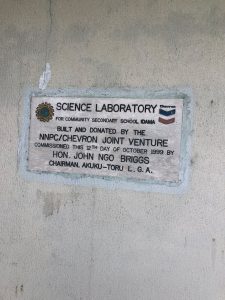
Education and Health
The impact is most visible in Idama’s only community school and health centre. When Hello ICON visited in July 2026, the roofs of the science laboratory and library were visibly corroded and leaking.
Ipalibo Tom Princewill, who taught there before leaving the community, told Hello ICON Magazine, “the smoke and health hazards from the flares are too much.” Parents are pulling children out. Teachers are leaving. The school that should train future leaders cannot function.
Under the Universal Basic Education Act 2004, the responsibility for public basic education infrastructure lies with state governments through the State Universal Basic Education Board and Local Government Education Authorities. Federal funding through UBEC is disbursed as a matching grant requiring counterpart funding from states.
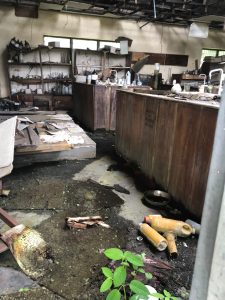
Ipalibo taught there before leaving. “The smoke and health hazards from the flares are too much,” he said. Parents are pulling children out. Teachers are leaving. The school that should train future leaders cannot function.
A 2017 study by Maduka and Tobin-West in the Niger Delta found that living in a gas-flaring host community made people 1.75 times more likely to be hypertensive compared to communities without oil and gas activities. The highest risk was among residents aged 20 to 40 and 60 to 80.
The Climate Angle
Stress on Human, Mangroves, Fisheries and the Marine Ecosystem
Rising temperatures and erratic rainfall are adding pressure. Mangroves, which protect the coast and serve as breeding grounds for fish and crab, are thinning. Fishermen in Idama say catches are falling, and waters they once drank from now leave an oily film.
Studies elsewhere in the Niger Delta have linked these changes to flaring. A 2017 review of impacts across the region found that gases released during flaring can alter rainwater and soil quality, reducing vegetation growth.
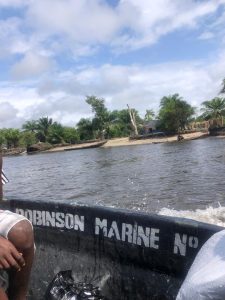
New Possibilities: What Would It Take to Fix Idama?
With 2030 four years away, Idama is asking whether Nigeria’s targets will be met on paper, or in the lives of its people.
On paper, the cures exist. Solar for health centres. Staffing funds. Oil money for host communities.
In Idama, they stopped at the shoreline.
Idama does not need new laws. It needs existing ones to reach the island.
Money: Where the oil money went
Since the Petroleum Industry Act of 2021, operators in OML 24 and OML 55 must pay 3 percent into Host Communities Development Trusts. HOSTCOM says billions are sitting in those trusts.
In Idama, the refrain is the same: We see the flare, we don’t see the money.
The community is not asking for charity. It is asking for what the law already promised. Part of that 3 percent should fund what is needed now. Rainwater tanks for homes where acidic rain has eaten the roofs. Cold storage and smoking kilns so women are not forced to overharvest.
The money exists. The problem is it has not reached the creeks. And where trust spending is not public, it is easy for it to be captured.
Power: Turn the lights on
Idama’s only health centre cannot admit patients. Rain falls straight inside. Night births happen in darkness.
The Rural Electrification Agency has a program called e-HEART to put solar in 3,700 primary health centres. 1.7 billion dollars is lined up from the World Bank and African Development Bank for facilities with no reliable power.
Idama is exactly who it was built for.
If Akuku-Toru LGA and Rivers State Primary Health Care Board list Idama, the lab fridge runs. Lights stay on when it rains. Patients can be admitted again.
The challenge is rollout has been slow, and solar needs maintenance that island communities are left to figure out alone.
People: Staff the clinic that is already there
The number one priority now is to do a proper renovation work in this Health Centre, Ibiba says. And secondly, we need more medical personnel. Even if a doctor just comes weekly.
The same is true for Idama Community School. Its library and labs are currently in a dilapidated state. Teachers are leaving.
“I taught in that school,” Ipalibo said. “Then I pulled my son out and relocated my family. The smoke and the living conditions are too much.”
A school without teachers and a clinic without staff is the same failure.
For the clinic, the money exists. The Basic Health Care Provision Fund is revitalizing over 7,000 primary health centres nationwide. But Rivers State must provide 25 percent counterpart funding and ensure Idama is listed and accredited as its ward focal PHC.
For the school, the money exists. The Universal Basic Education Fund is there. But to access it, the state or local government must provide 50 percent counterpart. Since the October 2025 Federal High Court judgment, Akuku-Toru LGEA can now apply directly to UBEC for schools like Idama’s, without going through the state board.
Put fishers, women traders, teachers and youth on the committees that decide. When Idama is in the room, things last.
Sea: Protect the mangrove that protects Idama
You cannot ask fishermen and periwinkle women traders to protect the marine ecosystem when the nursery of that ecosystem is dying.
Idama’s mangroves, once a nursery for fish and crabs, are thinning. Periwinkle beds that once took two hours to fill a basin now take two days.
The fix is to let the beds rest. Declare no take zones for six months. Replant mangroves with the women who know them. Map the creeks with fishers, so 30×30 has a local map, not just an Abuja map.
The challenge is protection only works if there is enforcement, especially against neighbouring villages fishing inside Idama territory.
Voice: Put Idama in the room
The question is no longer if Idama can survive. It is if anyone will choose it before it vanishes.
Right now, women like Madam Oluba are not in the rooms where 30×30 is planned. Youth like Mr. Ipalibo are watching their institutions collapse without a seat at the table.
30×30 needs a local seat for Idama. For fishers. For women traders. For teachers.
The challenge is inclusion costs money. Transport. Sitting allowances. Without it, community seats remain symbolic. You have a name on a list, not a voice in the room. On paper, Idama was consulted. In the creek, nothing changes. Government can say women and youth were included for 30×30. But if a fisher cannot afford the boat to Port Harcourt, if a woman trader cannot afford to miss a day’s picking, then the seat is only for photos and reports.
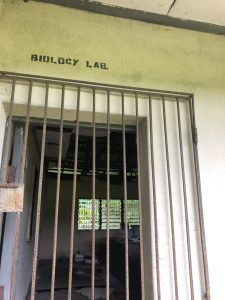
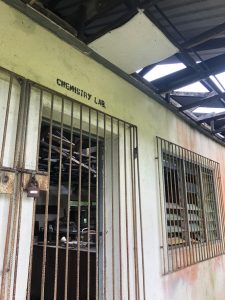
What Accountability Looks Like
The crisis in Idama will not be solved by one actor. Or by policies written in Abuja and forgotten in the creeks.
First, the law must have teeth.
Gas flaring needs to end. Operators in OML 24 and OML 55 need to clean up decades of spills and fund restoration. Penalties must be substantial enough to deter violations, not just cheaper than compliance.
Second, protection must include people.
Nigeria committed to protect 30 percent of land and ocean by 2030. That is four years away.
In Idama, that means localizing the process. Put fishers, women traders, teachers and youth on the committees that decide about the sea and land. When communities participate, management works.
Third, government financing must reach the creeks. Access to the Basic Health Care Provision Fund requires 25 percent counterpart funding from state governments, while access to Universal Basic Education Fund requires 50 percent. Accreditation and listing of facilities like Idama’s by the Rivers State Government and Akuku-Toru LGA are prerequisites for these funds.
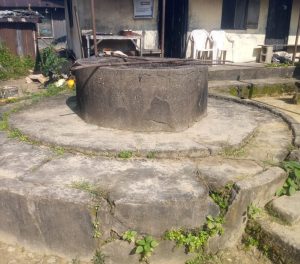
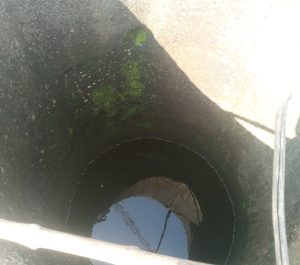 Idama’s community well, the major source of water for the town. Open, shallow and exposed to pollution. July 2026 | Hello ICON Magazine
Under the Rivers State Water Sector Development Law No. 7 of 2012, the provision of potable water supply in rural communities is the statutory responsibility of the Rivers State Water Board and the Ministry of Water Resources and Rural Development, in coordination with Local Governments.
Idama does not need pity. It needs partnership. Fund the school and primary health centre. Map the creeks. Install the tanks. Recognize the community’s right to manage what is left of its land and water. Let the people who stayed decide the future of the place.
Until then, the flares will keep burning. The rain will keep bringing rashes. The boats will keep waiting.
Idama is not asking for unrealistic rescue. It is asking for what was already promised by law in 30×30 and in the PIA.