
PORT HARCOURT – The women came first.
Not as victims. As the ones who documented the spills, mobilised the communities, challenged the polluters, and demanded accountability, often unpaid, under-funded, and at personal risk.
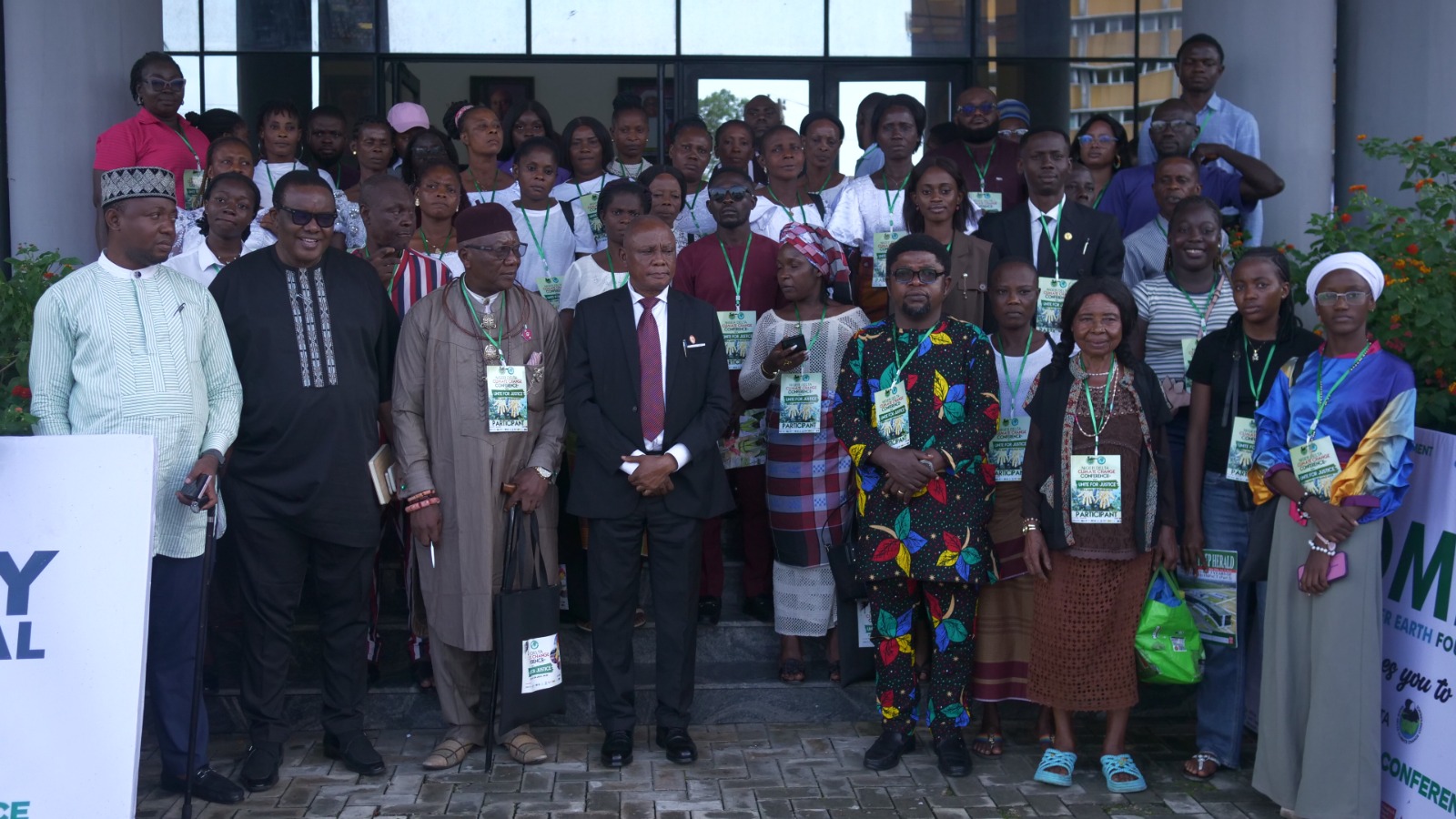
That was the message at the 4th Niger Delta Climate Change Conference 2026, convened by the Lekeh Development Foundation (LEDEF) with Yeraba Women Foundation, Kebetkache Women Development and Resource Centre, Amnesty International Nigeria, Agroecology Fund, COSET, Oilwatch Africa and Friedrich Ebert Stiftung (FES).
Theme: Unite for Justice: Niger Delta Communities Rise for Climate Action and Reparations
The Niger Delta, the communique said, remains one of Africa’s most ecologically significant regions, yet it keeps paying a disproportionate price for more than six decades of fossil fuel extraction, weak environmental governance and growing climate impacts.
Climate change here is not only an environmental issue. It is a crisis of justice, human rights, governance and development, and it falls hardest on women and girls.
Women Carry It First
As farmers, fisherfolk, traders, water-bearers and carers, women watch their livelihoods, health and time get eroded by every spill, flare and flood.
Continued gas flaring, oil spills, pollution of land and water, and environmental degradation are grave violations of the rights to life, health, livelihood and dignity, including women’s maternal and reproductive health.
Governments at all levels must enforce existing environmental laws, end routine gas flaring, compel timely oil spill remediation, and ensure full compliance, with women from affected communities taking part in monitoring remediation.
Oil companies operating in the Niger Delta must be held fully accountable for pollution, ecological destruction and human rights abuses, including comprehensive remediation and adequate reparations. Women in affected communities must be consulted and compensated directly, not only through male-led representatives.
Restoration must come before and alongside any talk of energy transition, carbon markets or renewed extractive activity in impacted communities.
A Debt Owed
Climate justice requires recognition of the historical ecological and climate debt owed by major polluting nations and multinational fossil fuel corporations to frontline communities, and above all to the women who absorb its daily burden.
The conference rejected what it called carbon colonialism, the commodification of community forests and the land on which women farm and gather, while industrialised nations continue excessive emissions.
Protection For Those Who Speak
Women environmental human rights defenders face harassment, intimidation, criminalisation and violence.
Governments must protect them, investigate and prosecute attacks and threats against them, and end reprisals against women who speak out on pollution and climate injustice.
Women, youth, Indigenous Peoples and other marginalised groups must be meaningfully represented in climate governance, environmental restoration and decision-making, particularly on reparations and resource allocation, with gender parity as the target.
Women’s rights to land, water and natural resources must be secured. Women’s participation and free, prior and informed consent must be required in compensation, remediation, resettlement and benefit-sharing agreements.
Community ownership, Indigenous knowledge systems and local stewardship must be respected and strengthened, including Indigenous and rural women’s knowledge of land, water, seeds, food and health, and the unpaid care and community labour on which resilience depends.
Two New Structures
The conference resolved to establish the Niger Delta Women Climate Justice Council, to be launched at the 2027 Conference, to lead women’s advocacy, document women’s experiences, support women defenders and ensure women’s voices in reparations and climate governance.
It also resolved to launch the Ken Saro-Wiwa Fellowship Programme to build the next generation of environmental justice advocates, human rights defenders, feminist movements, gender campaigners and local voices, with a dedicated track for young women and gender parity as a minimum in selection.
Evidence, Health and Energy
Governments, development partners and academic institutions should invest in community-driven environmental monitoring, independent research, air quality monitoring and locally generated scientific data. Data should be disaggregated by gender and should capture health impacts on women, and women-led community science should be supported.
Nigerian universities should review and strengthen curricula to produce graduates equipped to address climate, environmental and ecological challenges, with gender analysis built into that training.
Climate adaptation and resilience strategies must integrate public health, including maternal and mental health, food security, sustainable livelihoods, affordable energy, gender equality, care and social protection.
Nigeria’s energy transition must be guided by equity, justice, transparency, participation and accountability, ensuring no community bears a disproportionate burden. Women must take part as decision-makers, entrepreneurs and technicians, and clean, affordable cooking and household energy should be prioritised.
Carbon finance and emerging carbon market mechanisms should prioritise community welfare, ecosystem restoration and sustainable development, with transparent benefit-sharing that reaches women and avoids new forms of exploitation.
Governments should promote green industrialisation, renewable energy deployment and investment that create decent green jobs, with deliberate training and employment pathways for women and young people, while reducing dependence on extractive economic models.
The international community should significantly increase accessible climate finance, particularly for adaptation, Loss and Damage, ecosystem restoration and community resilience in the Niger Delta. Funding should reach women-led and community-based organisations directly, through simplified and accessible mechanisms, with a share set aside for women’s groups.
Access To Justice
The conference also called for urgent reforms to Nigeria’s environmental justice architecture, including strengthening judicial capacity, improving access to justice for affected communities, with legal aid and safe reporting channels for women, expediting the determination of environmental cases, and ensuring victims of pollution can obtain effective remedies within Nigeria without depending on foreign courts.
Civil society, community-based organisations, traditional institutions, faith-based organisations, the media and citizens should deepen collaboration on environmental justice, climate education, policy accountability and peaceful civic engagement. Women’s organisations should co-lead these efforts, and traditional and faith institutions should ensure women’s voices are heard in community decisions.
The call, finally, was to governments, international institutions, development partners, private sector actors, civil society and communities to work together to advance climate justice, ecological restoration and sustainable development, and to stand with the women who have held the line for the Niger Delta.
The conference reaffirmed that sustainable peace, environmental restoration, social justice and responsible governance are indispensable foundations for a climate-resilient and prosperous Niger Delta.
“The Niger Delta can no longer remain a sacrifice zone for global energy demands,” the communique said. “The time has come for accountability, restoration, reparations and a just transition that places people, ecosystems and future generations, and the women who sustain them, at its centre.”