


A new report from HERA launched 25 June 2026 at London Climate Action Week shows extreme heat is one of the most underestimated threats to city economies. HERA modeled four cities with different heat profiles, Ahmedabad, Bangkok, Monterrey, and Freetown, and found heat already drains as much as 4 to 8% of city GDP in an average year. In Bangkok, that loss equals the city government’s entire budget.
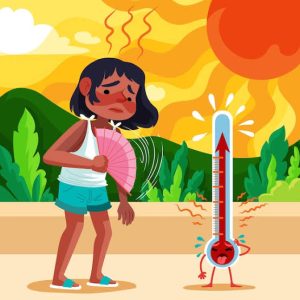
“The hot weather in Port Harcourt is one thing that affects me badly. There was a day I had to leave home to run an errand for my boss. As I came outside my home, I literally almost fainted from the scorching sun. No exaggerations. It felt like my breath was failing just before I found a vehicle. I don’t know of other people, but this strange heat of nowadays affects my mood as well. I am always tired. Constantly weak. Always thirsty because the sun is the type that drains badly.” – Precious Rhoda Obene, Hello ICON Magazine Community Member and Port Harcourt Resident
A better world is a product of a better people, and so is a broken world. This means that when people know better, they do better and when they do better, the world is better. Every environment has its peculiar challenges with peculiar solutions. This report unveils how exploiting marine resources without care is breaking both the people and the places they call home and depend on for survival.
“Mangroves protect against extreme weather and disasters. Not only do mangroves help prevent the progression of climate change, they also play an important role in limiting its impact. As global temperatures rise, extreme weather events like storms and flood surges are becoming more frequent and severe. The trunks of mangroves absorb the impact of waves, making them an excellent front line of defense that helps to protect higher ground. Restoring and protecting mangroves and valuing their role as a nature based-solution improves resilience of coastal communities and national economies.” – United Nations Environment Programme
Connecting The Dots
Heat is part of that disaster. Mangroves fight both. They soak up storm surge and they cool the air around them. But when we cut them for firewood, we lose that shield. The city gets hotter faster. Tin-roof homes trap more heat. Women selling fish at the jetty stand longer in sun with no shade. So the heat cost HERA is counting rises because we removed the trees that were holding it down.

The Cost of Cutting Trees: Mangroves
Mangroves are one of the world’s most efficient carbon sinks. Yet these same plants are cut down every day for firewood and fuel in Rivers State and globally. Many people who destroy these mangroves are unaware of its effects and life threatening dangers. They simply need it to cook and survive. However overtime, when the mangroves suffer these gradual degradations, its aforementioned benefits go with it. Homes flood faster. Fish lose their breeding grounds. Biodiversity takes a hit. The place breaks, and the people feel it first.
Women Pay First
The burden falls hardest on women working informally. Globally, informal sector women lose an estimated $57 billion in earnings each year to extreme heat. That’s 4-11% of their wages gone. Women reinvest up to 90% of their income back into family food, health, and school fees, so when heat cuts earnings, children feel it first. “Heat is taking a major toll on the women most exposed and least able to escape it,” said Kathy Baughman McLeod, HERA CEO.

HERA’s data also shows rising nighttime temperatures account for 85% of heat-related mortality because hot nights deny the body any respite. The risk hits low-income residents in homes built with corrugated iron and tin, the same homes you find along the creeks.
HERA’s tool covers 11,408 cities worldwide. Port Harcourt is not one of the 4 cities modeled in this report, but the patterns of heat loss, informal work, and poor housing match what we see daily in Rivers State.
A Double Crisis
In Port Harcourt, Nigeria, that heat cost sits on top of another crisis. The aim of this article among others is to create a mindset shift. We can only go as far as we know as individuals and as a people.
We’re fishing the sea empty. The nets here don’t choose. They take everything, even the small ones that should grow and breed. So the nets come back light. The plates come back empty. Families in PH have fished these creeks for generations. Now the water looks tired. When the sea is sick, the people who live from it get sick too.
Pollution makes water become unsafe. Fish die. People who drink or cook with the water get sick. Pollution makes it worse. Oil spills into the water. People dump waste. Rain carries city dirt into the creeks. The water turns bad.
In Idama, a riverine village in Rivers State, Port Harcourt, Nigeria, acidic rain is eating the roof of the only secondary school library and science lab. What is dumped in one creek shows up in another community days later. The connection is clear: damage to the place is damage to the people.

Weak Enforcement
The real gap is enforcement. The laws are there to protect the environment and marine life. But laws without people to enforce them mean nothing in the creeks.
The challenge is enforcement. There are too many laws with poor backing and weak enforcement in real time. People break the rules because they know nothing will happen. Without strong enforcement agencies, laws on paper mean little in the creeks.
Solutions: Hello ICON Magazine’s Recommendation
Fish Smarter
Sustainable harvesting must replace reckless fishing. Fishers need training on methods that allow fish populations to recover. Closed seasons and protected areas can help fish grow and multiply again.
Cool The City
Heat action must be part of coastal planning too. HERA’s report pairs with a tool covering 11,408 cities worldwide to compare solutions. The findings are clear: these measures pay for themselves. Heat Response Plans return 12 to 90 times their cost. Cool roofs lower indoor temperatures by 2 to 7°C from the day they’re installed, protecting the low-income households at greatest indoor risk. “We cannot keep designing heat responses as though everyone experiences heat the same way,” Baughman McLeod said. “When solutions are built with women in the informal sector, not just for them, they save more lives and protect more income per dollar.”
Communities Lead
Community participation is key. People who live by the water know the water best. When communities are part of planning and monitoring, rules are respected more. Local leaders and fishers must sit at the table with government and NGOs.
Share The Load
Public private partnerships can bring resources and expertise. Government alone cannot fund enforcement, cleanups, education, and heat action. Private companies that benefit from the environment must invest back into it.

Give Alternatives
Alternatives must exist. We should not kill sea animals excessively so they will not go extinct. But fishers also need to eat. People need other options. Fish farming. Aquaculture. Work that doesn’t depend on taking from the wild every day. And if we say stop cutting mangroves for firewood, we have to give people another way to cook. Gas. Better stoves. Something. Gas, improved cookstoves, and community woodlots can give people heat without cutting down protection trees.
Port Harcourt shows the interconnectedness between people and their environment for basic survival. When we forget that people and place are tied together, both suffer. Look after one, you look after the other. Break one, and both collapse. A better Port Harcourt starts with better choices by sensitized people who understand the cost of a broken place, from extreme heat to exploitation of marine resources.
Source: HERA, “Counting the Cost of Heat: The Case for Urgent Solutions for Cities”, 25 June 2026. For Port Harcourt-specific data from HERA’s 11,408-cities tool, contact Kelechukwu Iruoma at kelechukwu@heranow.org.