
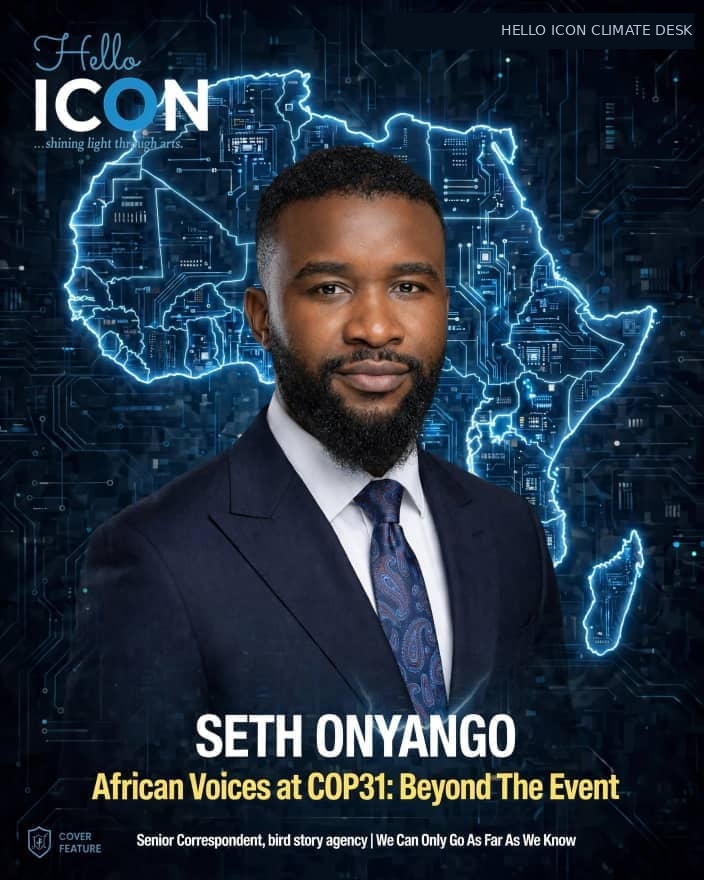
“I spent much of COP31 following the African Group of Negotiators, and one thing was clear: African countries were growing impatient with promises that could neither be measured nor enforced.” – Seth Onyango
Why COP31’s failure matters for At-risk Coastal Countries
COP31 ended in controversy with no deal on fossil fuels and no clear climate finance figures, especially for at-risk countries that bear the brunt of environmental degradation. That outcome was rejected by the EU, UK, Panama and Pacific island nations. The African Group of Negotiators also strongly criticised it over the failure to deliver binding finance commitments.
While COP31 ended in controversy on one hand, it has left a shift on the other hand, because controversies never leave us the same. They have a smooth way of uncovering truth concealed and exposing failed systems usually masked in eloquent speeches. This shift at the end of COP31 may be the beginning of a new dawn in the forthcoming COPs ahead.
Time will tell. Till then, we explore the often overlooked realities and impact of COP31 through the diverse perspectives of African Voices live at the event.
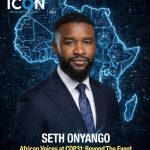
First in this series is Seth Onyango, a Kenyan-German journalist and senior correspondent with bird story agency. He is also co-founder and Editor-in-Chief of One Planet Agency, and reported live from COP31 in Antalya.
In this conversation, Onyango breaks down what collapsed in the finance talks, where the money is and is not going, and what an unresolved funding pledge means for a woman whose income depends on healthy coastal waters.
Our focus on this Episode is Idama, Rivers State, Nigeria, and the women whose livelihoods depend on periwinkle beds now vanishing under climate stress and human-marine exploitation.
We asked Onyango about the promise, the money, fossil fuels, Idama, 30×30, accountability, and what he would say to the women of Idama.
A. The Promise
1. At COP31, what do you think was the most important promise made on climate finance for the ocean and for communities like Idama?
I spent much of COP31 following the [African Group of Negotiators](PASTE AGN LINK), and one thing was clear: African countries were growing impatient with promises that could neither be measured nor enforced.
At one point, a draft agreement proposed raising adaptation finance to at least [$120 billion annually by 2035](PASTE DRAFT TEXT LINK). That was significant because it put an actual figure on the table. But as negotiations dragged on, the figure disappeared, and the summit eventually closed without an overarching deal.
For communities like Idama, that’s the problem in a nutshell. A woman whose income depends on healthy coastal waters cannot plan her future around an unresolved funding pledge.
I would have liked to see a clear agreement that gave coastal communities better access to adaptation finance, with money for restoring damaged ecosystems and protecting livelihoods. Antalya failed to deliver that certainty.
B. The Money
Where is the climate finance actually going? Is it reaching marine protection and the women and communities who steward the ocean, especially adaptation funding?
That’s the question I kept returning to in Antalya: when governments announce billions in climate finance, how much of it actually reaches the people living with the consequences of climate change?
We know money is flowing through multilateral banks, climate funds and government programmes. We also know that accessing it can be difficult, especially for small, community-led organisations.
During COP31, African negotiators pushed for clearer rules on how climate finance is counted. A loan that must be repaid is a very different proposition from a grant, particularly for countries already struggling with debt.
As for the women of Idama, I haven’t seen evidence that would allow me to say how much adaptation funding has reached them specifically. That deserves investigation.
I would like to see climate finance reported in a way that allows us to follow a dollar from the institution that approves it to the community that receives it. We should be able to establish who benefited, what changed and whether the intervention worked.
If we can track carbon credits down to the tonne, surely we can track climate finance down to the community.
C. Fossil Fuel
Why are we still funding fossil fuels while the sea is dying and livelihoods are collapsing? And why did COP31 still avoid naming a fair phase-out of fossil fuels?
Oil and gas still bring in enormous profits and public revenue. That gives producers a strong reason to resist change.
But the arguments I heard in Antalya were more complicated than a simple fight between those for and against fossil fuels. African negotiators asked how countries could move to cleaner energy, keep electricity affordable and create jobs without enough support.
Many African countries also see their oil and gas as assets they can use to build their economies. Asking them to leave those resources untouched while offering little finance is a hard political sell.
None of that excuses oil pollution or harm to coastal communities. A fair move away from fossil fuels has to protect those communities and give countries a realistic way to build cleaner economies. COP31 failed to settle that argument.
D. The Link to Idama
In your view, what is the link between fossil fuel money, climate change, and the loss of livelihoods like periwinkle harvesting in the Niger Delta?
The Niger Delta has produced oil wealth for decades. Yet many people living near that wealth have had to deal with polluted waters and damaged fishing grounds.
For women who harvest periwinkles, the health of the mangroves and tidal waters is directly tied to the money they take home. When those places are damaged, their work becomes harder.
Climate change brings other risks, including rising seas and coastal erosion. But we must be precise. An oil spill is not the same thing as climate change, and we need local evidence to know what is causing a decline in any one place.
The questions I would ask are simple: who earns from the oil, who pays to clean up the damage, and how much of that wealth reaches the people who live there?
E. 30×30
The world promised to protect 30% of the ocean by 2030 under [30×30](PASTE 30X30 EXPLAINER LINK). As we head into 2027, are we on track? What is missing?
No, we are well behind. By 2026, about a tenth of the ocean had been designated as protected or conserved, and a much smaller share had strong protection in practice.
But the percentage alone does not tell us enough. A place can be called protected while pollution continues or local people have little say in how it is managed.
I would like to see more work on restoring mangroves, enforcing rules against pollution and involving fishing and coastal communities in decisions. Women who work these waters know when things are changing. Their knowledge should count.
The aim should be a healthier ocean and safer livelihoods, not just a bigger number on a map.
F. Accountability
What does real accountability look like before [COP32](PASTE COP32 LINK)? How should we hold leaders to what they promised?
Start with the figures. Governments and climate funds should say how much they promised, how much they actually paid, how much was given as grants or loans, and where it went.
I heard negotiators argue over huge sums in Antalya. People should be able to understand what those sums mean without having to read hundreds of pages of UN documents.
There is a job for journalists here too. We should return to the promises after the cameras have left. Visit the projects, speak to the people they are meant to help and ask what changed.
And African governments must answer those questions as well. We cannot demand openness from wealthy countries and ignore how money is handled at home. Before COP32, I would like to see more evidence of delivery and fewer announcements dressed up as results.
G. Message to The Women
If you could speak directly to the women of Idama who are starting their own local Roundtable, what would you say to them?
I would say: keep organising, and keep a record of what you know.
You know the waters where you work. You know where periwinkles were once easy to find, where they are becoming scarce and what that means for your families. Write those changes down. Take photographs where you can. Work with people who can test the water and help establish what is happening.
Then take clear questions to the authorities, regulators and companies concerned. Ask for answers and dates. Keep copies of what they tell you. Bring younger women into the conversation too.
I cannot promise that people in power will listen straight away. But good evidence, a clear demand and a community speaking together are difficult to dismiss.
You are welcome to add one final message you would like our readers to take away.
I left Antalya with the sense that African countries are more willing to speak plainly about what they need from climate talks be that money they can count, fair terms and a chance to build their own industries. But the test comes after the summit. Did the money arrive? Who received it? Did anything change? Those are the stories I want to keep following.
BIO and Publication Details
Seth Onyango is a Kenyan-German journalist and senior correspondent with [bird story agency](PASTE BIRD AUTHOR LINK). He is also the co-founder and Editor-in-Chief of [One Planet Agency](PASTE ONE PLANET LINK) and as a communications and digital-strategy specialist, he focuses strongly on how audiences behave inside the attention economy. He covers climate policy, energy, trade and Africa’s changing economy, and reported from COP31 in Antalya, Turkiye.
Title: Senior Correspondent, bird story agency | Co-founder and Editor-in-Chief, One Planet Agency
Editor’s Note: This is Episode 1 of African Voices at COP31: Beyond The Event Accountability Series.
The primary objectives of this series are to deepen public understanding and in turn, bridge accountability gaps. We are following what was promised in Antalya, where the money is going, and what accountability should look like before COP32, rooted in Idama, Rivers State, Nigeria.
Responses have been slightly edited for clarity and length.