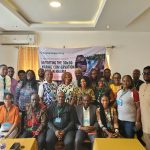

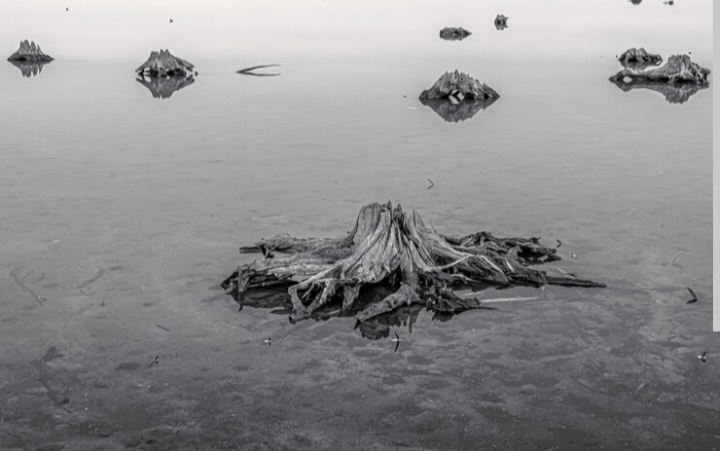
In Idama, tomorrow is being eaten today.
It is eaten in Idama’s only Community School, where acidic rain from gas flaring has corroded the roofs of the lab and library, and future leaders lack access to quality basic education.
It is eaten in the creeks, where overharvesting of periwinkle, fish, and crabs, alongside oil bunkering, is destroying what remains of the marine ecosystem.
It is eaten in the air and water, where climate stress is pushing mangroves, mollusks, and fisheries toward collapse.
It is eaten in policy, where Nigeria’s 30×30 commitment to protect 30% of land and ocean by 2030 remains far from the realities in Idama.
It is eaten in the lives of talents, families, dreams, and sustainable livelihoods, where forced migration of younger generations has left Idama more densely occupied by older indigenes. It is eaten in bodies that cough through smoke-filled nights, in children with skin rashes after the rain, and in minds carrying eco-anxiety and eco-grief for a sea that no longer gives and a land that no longer protects. Here, culture is breaking because the sea and the land can no longer sustain them.
“Life has changed a lot from the one we used to know during our days growing up,” Madam Oluba, 72, told Hello ICON Magazine. She is a periwinkle harvester and trader in Idama, Akuku Toru LGA, Rivers State.
“I now sell from a small kiosk beside our family house to support my periwinkle trade. The sea is polluted. The air is too. As I speak, the acidic rain from gas flaring is destroying the roof of homes, including mine.”
“I wanted my son to grow up in Idama like I did,” Mr. Ipalibo Tom Princewill, 40, a former teacher and Idama indigene said. “I studied in the Idama Community School. I taught in that school. I sent my son to that school. Then I pulled him out and had to relocate my family. The rain from gas flaring is eating the roofs of the lab and library. There are no textbooks. No equipment. The smoke and health hazards from the flares are too much. What future am I giving my child here?”
Name of Madam Oluba has been withheld on request for safety reasons. Mr. Ipalibo Tom Princewill spoke to Hello ICON Magazine by phone from Idama.
The Community Angle: Pollution, Waste, and Oil Bunkering
Idama is a coastal settlement in Akuku Toru Local Government Area, Rivers State. The people are Ijaw. Their lives are tied to water. Fishing, crabbing, and periwinkle harvesting are the main livelihoods.
But the creeks are emptying. Overharvesting has reduced periwinkle, fish, and crab stocks. Oil bunkering adds another layer of pollution. Spills and waste enter the water daily. There is no waste management system. Plastics and refuse line the shorelines.
Fishers now travel farther and stay longer for smaller catches. Women who depend on periwinkle say the sizes are smaller and the beds are fewer. The link between people and the sea is weakening.
The Industrial Angle: Gas Flaring Destroying the Only Community School_
The scale of the problem is national. According to data from the Nigerian Upstream Petroleum Regulatory Commission reported in January 2026, Nigeria flared 203.97 billion standard cubic feet of gas in 2025. That was 7.54% of total gas produced and an increase from 192.9 billion scf in 2024, despite government pledges to end the practice.
Why does flaring persist?
A 2023 comparative legal analysis found that while Texas cut gas flaring to 0.4% through strong regulations and independent enforcement, Nigeria’s framework “lacks effectiveness due to governmental conflict of interest and inadequate penalties.”
In Idama, that national failure is felt locally. Gas flaring continues around the community. The heat, smoke, and acidic rain damage roofs, crops, and health. Research has linked gas flaring directly to acid rain, noting that “corrugated roofs in the Delta region have been corroded by the composition of the rain that falls as a result of flaring.”
The impact is most visible in Idama’s only Community School. The roofs of the science laboratory and library are corroded by acidic rain. There are no textbooks. No laboratory equipment.
Mr. Ipalibo Tom Princewill taught there before leaving. “The smoke and health hazards from the flares are too much,” he said. Parents are pulling children out. Teachers are leaving. The school that should train future leaders cannot function.
The health risks are documented. According to the Nigeria Gas Flaring Tracker, gas flaring emits nitrogen oxides, sulphur oxides, particulate matter and other pollutants linked to cancer, neurological damage, and respiratory illness. The agency notes that “deformities in children, lung damage and skin problems have also been reported.”
A 2013 study reached the same conclusion, warning of reproductive and developmental effects from exposure to pollutants released during incomplete combustion.
Newer research from the Niger Delta specifically links flaring to heart disease. A 2017 study by researchers at the University of Port Harcourt found that residents of gas-flaring host communities are 75% more likely to have hypertension than people living in communities without oil exploration.
The Climate Angle: Stress on Mangroves, Sea Animals and Fisheries
Rising temperatures and erratic rainfall are adding pressure. Mangroves, which protect the coast and serve as breeding grounds for fish and crabs, are under stress.
A 2017 review found that gas flaring alters water chemistry and heavy metal levels in rainwater in the Niger Delta, and reduces vegetation growth and productivity due to changes in soil quality.
Nigeria holds the largest mangrove forest in Africa. According to a 2023 study, the country’s mangroves cover 10,500 square kilometers. The same research found that Rivers State alone lost 2,281 hectares of mangrove forest between 1996 and 2016, an average of 114 hectares per year. The authors called for state-specific restoration and protection policies.
Gas flaring also drives the broader climate crisis. Research notes that gases from flaring “make up about 80% of global warming to date.”
Sea animals including mollusks, periwinkles, and juvenile fish are declining. Fisheries are collapsing. When the mangroves go, the fish go. When the fish go, the people go.
The Policy Angle: 30×30 Target, MPAs, and Enforcement Failure
Nigeria has committed to protect 30% of its land and ocean by 2030 under the Global Biodiversity Framework, also known as 30×30.
In Idama, that target is not visible. There are no marine protected areas. There is no community-led conservation plan. There is no enforcement against oil bunkering or overharvesting. Policy exists on paper. It has not reached the creeks.
The Human Cost We Don’t Talk About
The cost is not just environmental. It is human.
Young people are leaving. Idama is now more densely occupied by older indigenes. Skills, stories, and culture are leaving with the youth.
The economic loss is also staggering. A 2013 report estimated that about $2.5 billion is lost annually in government revenues through gas flaring. For Idama, that loss shows up in empty nets and smaller periwinkle. Women who once earned from 3 baskets a day now struggle to fill one. That is money not spent on school fees, medicine, or food. It is poverty engineered by waste.
The burden falls unevenly. Women who harvest periwinkle and process fish spend the most time in the polluted creeks and smoke. When catches collapse, it is women who first switch to petty trading, as Madam Oluba did. When children fall sick from flares, it is mothers who nurse them. Yet women are rarely in the rooms where 30×30 or gas policy is decided.
Women like Madam Oluba are shifting from the creeks to roadside kiosks. Men are abandoning fishing. Families are splitting across cities. Sustainable livelihoods are disappearing.
The 2017 study also found that the risk of hypertension was highest among residents aged 20 to 40 and 60 to 80 in gas-flaring communities. For places like Idama, that means both the working-age population and the elderly bear the brunt.
“What future am I giving my child here?” That question is being asked in many homes.
Solutions: What Accountability Looks Like
The crisis in Idama will not be solved by one actor. It will not be solved by policies written in Abuja and forgotten in the creeks.
Real accountability starts with law and enforcement. Gas flaring needs to end. The companies operating here need to clean up decades of spills and fund restoration of the land and water. As experts and scientific researchers have argued for years, penalties need to be substantial enough to deter violations, not just costs that are cheaper than compliance.
But law alone is not enough. Protection also has to include people.
Nigeria has committed to protect 30% of its land and ocean by 2030. That is 4 years from now. In Idama, that commitment will require localizing the process. That means including fishers, women who process and trade, teachers, and youth in decisions about the sea and land. As experts and scientific researchers have found, when communities participate in management, compliance and outcomes improve.
Protection also requires alternatives. Restrictions without support risk deepening hardship in communities that depend on the sea. Investment is needed in aquaculture, fish processing, boat services, eco-tourism, and small businesses to reduce pressure on fisheries while creating income. Temporary support and skills training can help families through transition periods and give young people options to stay.
Protection also means repair. Idama’s only Community School needs urgent rehabilitation. Roofs damaged by acidic rain need to be fixed. Laboratories need equipment. Children cannot learn effectively in environments affected by smoke and pollution.
Protection also means addressing who bears the burden. Women spend the most time in polluted creeks and are often first to lose income when catches decline. They are also underrepresented in decision-making. As experts and scientific researchers have noted, any approach to 2030 targets will require their inclusion.
Civil society and media have a role in documentation. Government has a role in enforcement. Companies have a role in remediation.
All hands are needed.
Because with 2030 just 4 years away, delay means there may be little left to protect.
The mangroves will be gone. The periwinkle will be gone. The school will be gone. The young people will be gone.
Government needs to enforce the law. Companies need to clean up. Communities need to lead.
Otherwise, the next generation will inherit no sea to fish, no school to learn in, and no home to return to. Culture will break, ancestral roots will be lost to forced migration, and Idama’s tomorrow will be remembered only in stories.
Idama’s tomorrow is being eaten today.